
The short answer: A Liebherr that will not cool is most often choked on a dusty condenser, which an owner can clean. Beyond that, a stalled evaporator fan or an iced-over defrost coil keeps cold from reaching the fresh-food side, and a sealed-system fault keeps cold from being made. A BioFresh drawer running warm usually points at a blocked vent or fan, while one freezing food points at its setting or a sensor. Clean the condenser, clear vents, confirm the fan, and give it a day. If it stays wrong, book a technician. Here is how to read it.
How a Liebherr Holds Temperature, and What Biofresh Adds
Liebherr refrigeration is built to hold a precise, steady temperature, which is why it is a favorite in Johns Creek kitchens, from Monolith and integrated columns to units with BioFresh drawers. The core system works like other quality refrigeration: a compressor and condenser reject heat, an evaporator coil chills air, and an evaporator fan pushes that cold air through the compartments, with a defrost cycle melting frost off the coil. BioFresh adds a twist. Those drawers are a separate, tightly controlled climate meant to sit just above freezing, with Hydro and Dry settings for high or low humidity, so produce and proteins keep far longer. That precision means a BioFresh drawer has its own airflow path and often its own sensor, so a warm or frozen drawer can point somewhere different than a whole cabinet that will not cool.
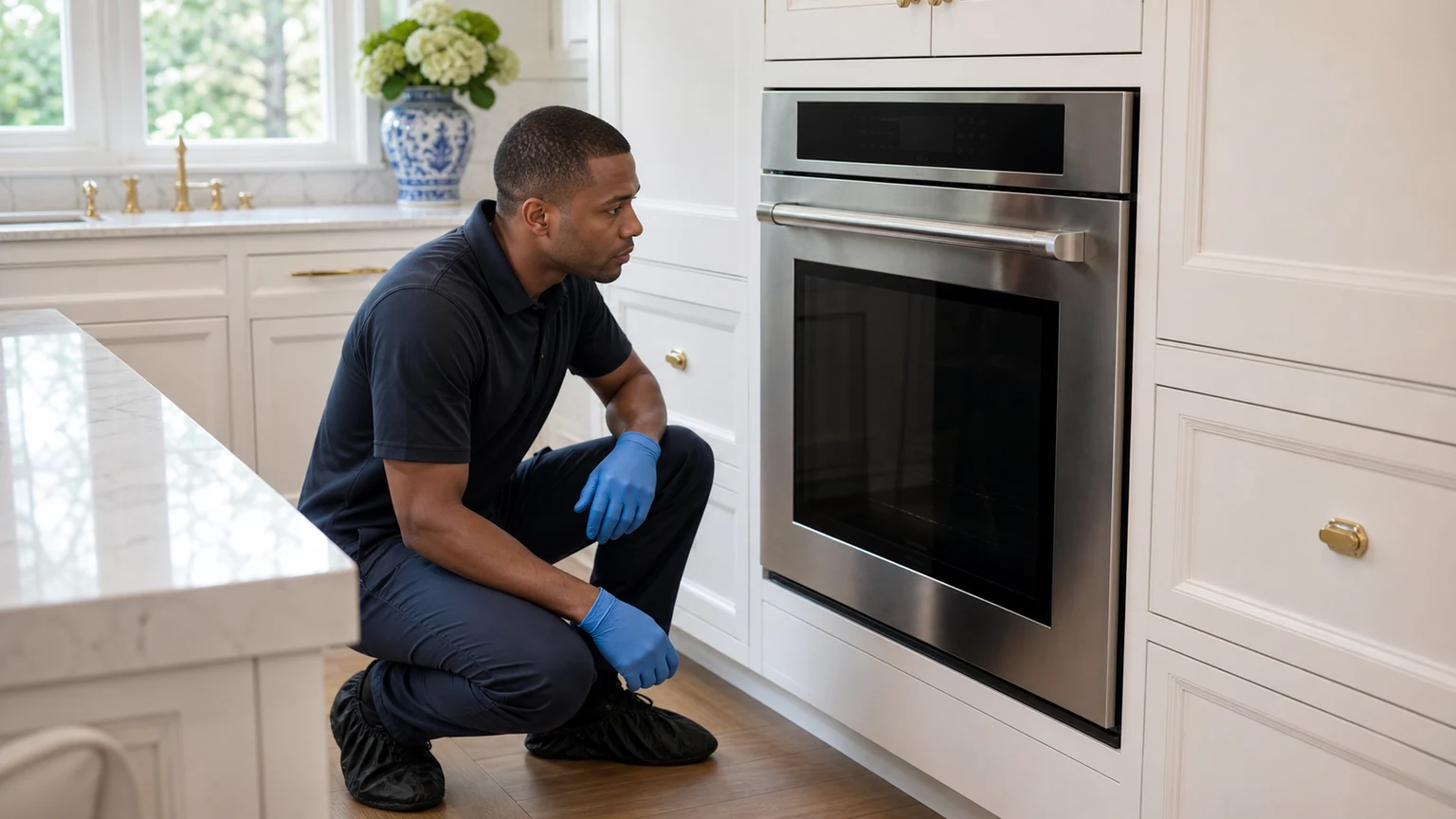
Reading a Liebherr Cooling or Biofresh Fault
Diagnose from how the unit is failing. The table maps the symptoms we get called about to the likely cause and a safe first step. Note the exact behavior, whole cabinet or one drawer, before you touch anything, because it points a technician straight at the failed part.
| What You Notice | Likely Cause | First Step |
|---|---|---|
| Whole unit warm, runs constantly | Dusty condenser or a sealed-system fault | Clean the condenser, give it a day to recover |
| Freezer cold but fridge warm | Failed evaporator fan or an iced defrost coil | Listen for the interior fan; then book a diagnosis |
| BioFresh drawer too warm | Blocked vent to the drawer, failed fan, or sensor | Clear the vent, do not overfill; then book if warm |
| BioFresh freezing food | Drawer set too cold, overfilled at the vent, or sensor fault | Confirm the setting; move food off the back vent |
| Frost or ice on the back wall | Defrost heater, sensor, or timer fault | None; book a defrost system diagnosis |
A whole unit running warm and a BioFresh drawer out of range are the two we hear about most. A warm cabinet often traces to a dusty condenser, while a BioFresh problem usually comes down to airflow, a setting, or a sensor. Use this guide for the wider picture and the not-cooling problem page when you want the full walkthrough.
If a Liebherr drifts well above temperature and your quick checks do not bring it back within a few hours, move perishables to another fridge or a cooler before they spoil, and empty a warm BioFresh drawer of anything delicate. Do not keep opening the door to monitor it, since every opening adds warm air and slows recovery. Clean the condenser and confirm the seal and vents, then book service, and keep the food cold elsewhere until the unit is repaired. Protecting the contents while you wait costs nothing.
Condenser, Fans, Defrost, and the Biofresh Climate
Four things decide whether a Liebherr cools correctly. The condenser sheds the heat pulled from the cabinet, and a coil packed with dust is the most common reason a unit runs constantly and drifts warm. The evaporator fan circulates cold air into the fresh-food side and the BioFresh drawers, and when it stalls the freezer can stay cold while the fridge and drawers warm. The defrost system melts frost off the coil, and when it fails ice builds until air cannot pass, again warming the fresh-food side. The BioFresh climate adds its own vent path and often a dedicated sensor, so a drawer that runs warm can trace to a blocked vent or that sensor even when the rest of the cabinet is fine, and a drawer freezing food can be a setting or a sensor misreading. We clean the condenser and confirm the fans first, then test the defrost and the BioFresh airflow and sensor, matching the fix to the fault.
Owner Checks That Restore Cooling
Before you book, a few safe steps resolve a good share of complaints. First, clean the condenser: on many columns it sits behind the lower grille, so switch the unit off and vacuum or brush the coil clear of dust, since a choked coil warms the whole cabinet. Second, listen for the interior evaporator fan when the door switch is held or defeated, because a silent fan leaves the fridge and drawers warm while the freezer stays cold. Third, for a BioFresh drawer, confirm its humidity setting is where you want it, clear the vent at the back of the compartment, and do not pack items tight against that vent, which both blocks airflow and can freeze food pressed to it. Give the unit a full day to recover after cleaning. When the cabinet stays warm, or a BioFresh drawer keeps running warm or freezing food after these checks, the fan, defrost, or a sensor needs a technician.
When to Book
A Liebherr that has drifted warm is worth a condenser cleaning, a fan check, and a day to recover, and a BioFresh drawer is worth a setting and vent check first. Book a technician when the cabinet stays warm after cleaning, when the freezer is cold but the fridge is not, when a BioFresh drawer keeps running warm or freezing food, or when ice builds on the back wall. The evaporator fan, the defrost system, the BioFresh sensor, and the sealed system all need proper testing, and any refrigerant work requires appropriately qualified handling. We fit model-specific Liebherr Genuine OEM Parts selected to your model, and every repair we complete in Johns Creek carries our Completed repairs include a 180-day repair warranty. Written terms are provided with the repair. Diagnostic and travel fees, if applicable, are confirmed before the appointment and before repair approval.