
The short answer: A La Cornue oven that will not heat is almost always a weak or failed gas igniter that can no longer open the safety valve, sometimes a thermostat or gas-supply issue. Uneven baking is often the vaulted-oven design at work, eased by rotating the pan, but a far-off temperature points at a drifted thermostat. Confirm the gas is on and the cooktop lights, then use an oven thermometer. If the oven will not heat or bakes badly off temperature, book a technician. Here is how to read the oven on North Fulton.
How a La Cornue Oven Heats
The vaulted gas oven is the heart of a La Cornue range, and it is a fixture in the grandest Johns Creek kitchens, from the Chateau line to the CornuFe. Unlike a modern fan convection oven, La Cornue's signature oven is designed to circulate heat gently around a curved, vaulted cavity, giving the even, enveloping bake that the brand is known for. A gas oven lights through a hot-surface igniter: when you set a temperature, the igniter draws current and glows, and only when it is hot enough does the safety gas valve open and the burner light. A thermostat then cycles the burner to hold the set temperature. Because these ranges are hand-built with no display or fault codes, a heat problem is read from how the oven behaves, and the igniter is the part that fails most often.
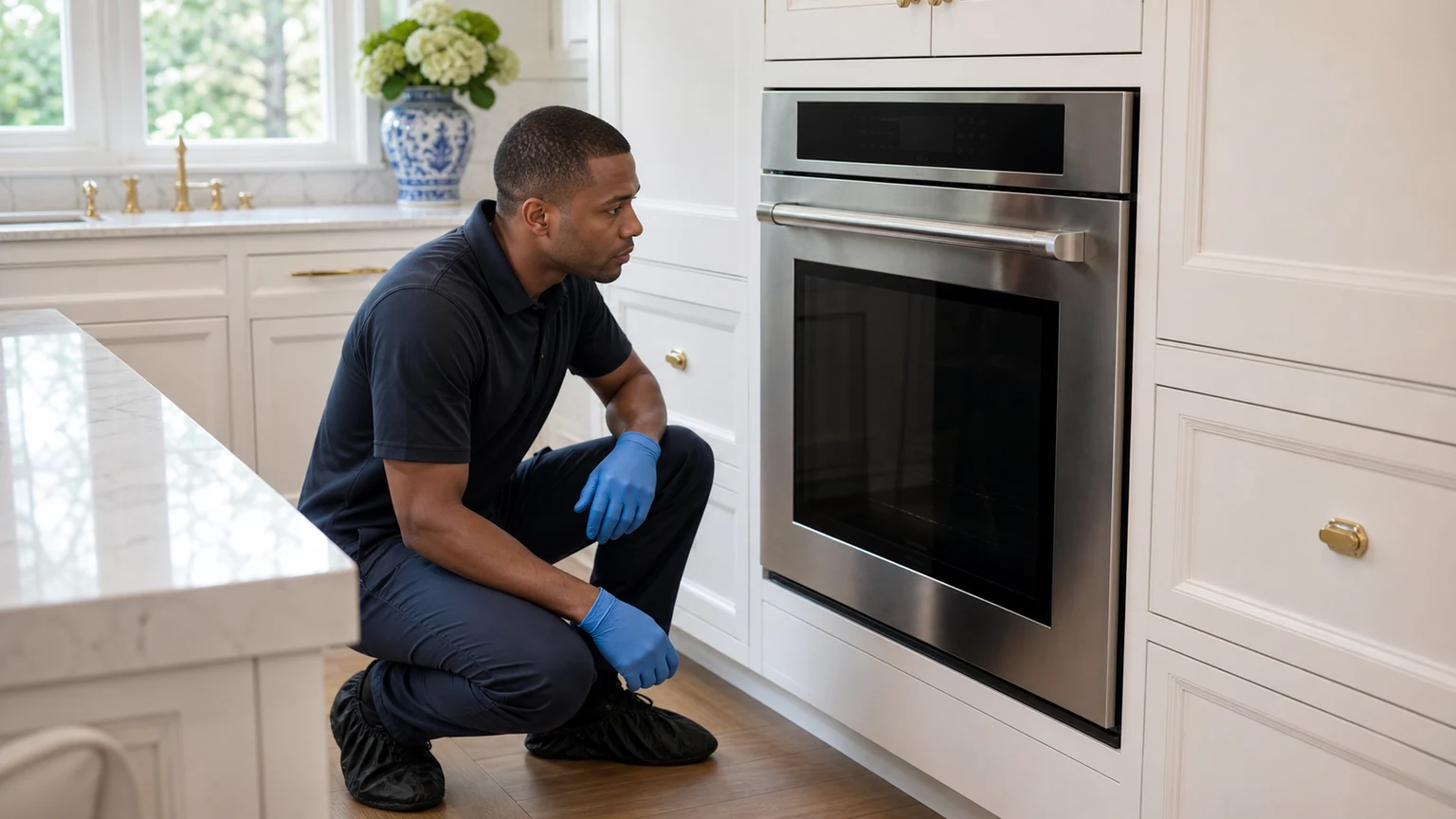
Reading a La Cornue Oven Heat Fault
With no code to read, you diagnose from what the oven is doing. The table maps the symptoms we get called about to the likely cause and a safe first step. Note the exact behavior before you touch anything, because it points a technician straight at the failed part.
| What You Notice | Likely Cause | First Step |
|---|---|---|
| Oven will not heat at all | Failed igniter or a closed safety gas valve | Confirm gas is on and cooktop lights; then book |
| Very slow to reach temperature | Weak igniter not fully opening the safety valve | None; the igniter draw needs measuring by a technician |
| Bakes hot or cold overall | Drifted oven thermostat or calibration off | Confirm with an oven thermometer, then book |
| Uneven, one side hotter | Normal vaulted-oven behavior or a cycling burner | Rotate the pan; if far off, book a burner check |
| Burner lights then goes out | Safety valve or flame-sensing fault | None; the valve and sensing need testing |
An oven that will not heat and one that is slow to reach temperature are the two we hear about most, and both usually trace to the igniter. Mild unevenness is often the vaulted design rather than a fault. Use this guide for the wider picture and the oven-not-heating problem page when you want the full walkthrough.
A gas oven that will not light protects you: the safety valve stays shut until the igniter proves it is hot enough to burn the gas cleanly. It is dangerous to force or bypass that system to get the oven going, because it can release unburned gas into the cavity. If the oven will not heat, do not leave the knob on hoping it will catch, and if you smell gas that lingers, shut the gas off at the range valve and ventilate. Let a technician test the igniter and valve rather than working around the safety.
Igniters, Thermostats, and the Burner
Three parts govern a La Cornue oven's heat. The hot-surface igniter is the usual failure: as it ages it still glows but draws less current, and below a threshold the safety valve will not open, so you see a glowing igniter and a cold oven, or an oven that takes far too long to heat. Judging a weak igniter means measuring its current draw, which is a technician's test, not a visual guess. The thermostat senses the cavity temperature and cycles the burner to hold the set point; when it drifts, the oven bakes hot or cold overall, which an oven thermometer confirms. The safety gas valve and the burner itself round out the system, and a valve that opens erratically shows as a burner that lights then goes out. We test the igniter draw and the thermostat first because they cause most heat complaints, and every part is matched to your exact La Cornue model.
Owner Checks Before You Book
Before you book, a few safe steps tell you a lot. First, confirm the gas is on and that the cooktop burners light, which rules out a supply problem and points any oven fault at the igniter or valve rather than the gas line. Second, if the oven heats but bakes off, place an oven thermometer on the center rack and check it against the set temperature after a full preheat, because a calibration or thermostat drift can masquerade as a bigger fault. Third, for mild unevenness, rotate the pan halfway through, since the vaulted design naturally has gentle hot and cool zones and this is not a fault. None of this needs a tool beyond a thermometer. When the oven will not heat, is very slow to heat, or bakes far off temperature after these checks, the igniter, thermostat, or safety valve needs a technician, and gas work on a hand-built range is not a job for guesswork.
When to Book
An oven that bakes a little off is worth a thermometer check and a pan rotation. Book a technician when the oven will not heat at all, when it is very slow to reach temperature while the igniter glows, when it bakes far off the set temperature, or when the burner lights then goes out. The igniter, the thermostat, and the safety gas valve all need proper testing, and the oven's gas safety should never be bypassed. We fit model-specific La Cornue Genuine OEM Parts selected to your model, and every repair we complete in Johns Creek carries our Completed repairs include a 180-day repair warranty. Written terms are provided with the repair. Diagnostic and travel fees, if applicable, are confirmed before the appointment and before repair approval.